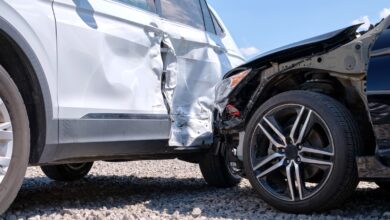
What To Do After A Car Accident in Westerville, Ohio: A Practical Repair and Safety Guide
Learn what to do after a car accident in Westerville, from documenting damage and protecting passengers to assessing vehicle safety and repairs.
Key Takeaways
- Put personal safety and passenger injuries first after a collision.
- Move to a safer location when it is practical and safe to do so.
- Photograph the crash scene, vehicle damage, road conditions, and warning signs.
- Exchange required information and keep witness details and dashcam footage when available.
- Report the accident appropriately and communicate factual information with insurers.
- Do not assume a vehicle is safe because visible damage appears minor.
- Have structural, mechanical, electrical, sensor, and safety-system damage properly inspected.
- Review repair estimates, parts, supplements, warranties, and final safety checks before accepting the vehicle.
- Replace or inspect child car seats according to crash severity and manufacturer guidance.
A collision on a busy Westerville corridor, a neighborhood street, or a wet Central Ohio roadway can leave drivers trying to make decisions all at once. The most useful approach is to handle immediate safety first, document what happened, and then assess the vehicle carefully before deciding whether it is ready to drive or needs help from an auto body shop professional. Even a low-speed impact can affect more than the visible bumper or paint. A calm checklist helps drivers protect passengers, preserve useful information for an insurance claim, and recognize when a vehicle may need a closer inspection.
The First Minutes After a Collision
Check yourself and your passengers for injuries before focusing on the vehicles. Call 911 when anyone is hurt, traffic is blocked, there is smoke or a fire risk, or the situation feels unsafe. Do not move an injured person unless there is an immediate danger, such as fire or approaching traffic. Once everyone is safe and the immediate situation is under control, drivers can document the damage and contact a collision repair professional to determine what inspection or repairs may be needed.
How To Make the Crash Scene Safer
If no one is injured and the vehicle can be moved safely, exiting an active travel lane may reduce the risk of another crash. Use hazard lights, stay alert for traffic, and keep passengers away from leaking fluids, damaged electrical equipment, or smoke.
- Check for injuries and call emergency services when needed.
- Turn on hazard lights.
- Move to a safer location only when practical and safe.
- Keep children and passengers away from traffic.
- Wait for instructions from responding officers when they are present.
Once the immediate situation is under control, a vehicle that appears driveable may still need professional assessment if the impact affected its structure, alignment, lighting, sensors, or safety equipment.
What To Photograph and Record
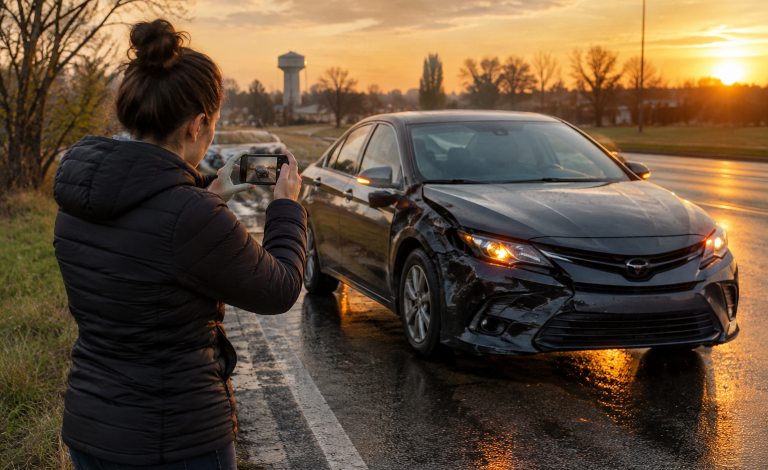
Photos taken before the scene changes can provide a clearer record of the crash. Capture wide views of the roadway, lane markings, traffic signs, weather conditions, debris, and the positions of all involved vehicles. Then take close-ups of dents, broken lights, glass, tires, wheels, license plates, and dashboard warning lights. Exchange names, contact information, insurance details, and vehicle information with the other driver. If witnesses are willing, collect their names and contact details. Save available dashcam footage and write a short timeline while the details are fresh.
Ohio Crash Responsibilities
Ohio law generally requires a driver involved in a collision on a public road or highway to stop at the scene and provide identifying and vehicle information to injured people, affected vehicle occupants or owners, and responding officers. Drivers can review the state’s requirements for stopping after an accident before relying on assumptions about their responsibilities. Keep conversations factual. Describe what you saw and what occurred, but avoid guessing about speed, fault, injuries, or repair costs. Local procedures and insurance policies can also create additional reporting steps.
How To Handle Insurance Calls
Notify your insurer promptly and provide accurate basic details about the crash. It is reasonable to ask how towing, rental transportation, deductibles, inspection procedures, and newly discovered damage will be handled. Review the policy before making decisions based on verbal summaries alone. When a crash involves serious injuries, disputed fault, or a difficult claim, consider obtaining advice from an appropriately qualified legal or insurance professional.


Why Minor Damage Can Hide Bigger Problems
A lightly scraped bumper can conceal damage behind its outer cover. Brackets, mounting points, parking sensors, lights, exhaust components, trunk latches, and nearby panels may require inspection after an impact. A rear-end collision, for example, can affect trunk alignment or sensor operation even when the damage looks limited from a distance. Do not ignore new pulling, vibration, rubbing, grinding, fluid leaks, uneven tire wear, warning lights, or changes in braking and steering. A vehicle should not be driven when visibility, braking, steering, airbags, or other key safety systems may be compromised.
How To Review a Repair Estimate
An initial estimate often addresses visible damage. Further issues may appear after inspection or partial disassembly, resulting in a documented supplement. A clear estimate may list:
- Parts and repair materials
- Labor and paint-related work
- Alignment or mechanical checks
- Electronic scanning or calibration when applicable
- Towing, storage, or rental-related charges
Ask whether the listed replacement parts are new, recycled, or aftermarket, and request an explanation when the repair plan changes.
Questions To Ask Before Choosing a Repair Shop
- Will the vehicle be checked for hidden structural or mechanical damage?
- How will cameras, sensors, and airbag-related components be handled?
- Will the repair plan be explained before work begins?
- How will newly discovered damage or delays be communicated?
- What types of parts and materials are planned?
- Is completed work covered by a written warranty?
- Will the vehicle receive a final safety review or road test when appropriate?
What To Do With a Child Car Seat After a Crash
Child restraints deserve separate attention after any collision. The National Highway Traffic Safety Administration advises replacing seats involved in moderate or severe crashes. In contrast, its criteria for a minor crash include a driveable vehicle, no injuries, no airbag deployment, no damage to the door nearest the seat, and no visible damage to the seat. Follow the manufacturer’s instructions and review when a car seat may be used after a crash before reusing it.
The Final Vehicle Safety Check
Before accepting a repaired vehicle, check that there are no unexplained warning lights and that headlights, brake lights, turn signals, cameras, and parking sensors operate as expected. Confirm that doors, the hood, trunk, or hatch open and close correctly. During a careful drive, note whether the vehicle tracks straight and whether there is any new vibration, rubbing, pulling, or grinding. Also, review the repair paperwork, including the final invoice and any warranty information. Paint appearance and panel gaps should be consistent with the completed repair plan.
Common Questions About Collision Repairs
Can a car be unsafe even if it still drives?
Yes. A vehicle can move under its own power even with damage to the steering, suspension, lighting, sensors, or other safety-related components.
Should drivers get more than one estimate?
Comparing estimates can help identify missing services, unclear charges, or meaningful differences in parts and labor. The lowest estimate is not always the most complete repair plan.
How long do collision repairs take?
Timing can depend on the extent of damage, parts availability, insurer approvals, paintwork, and any additional issues found during disassembly.
What is a repair supplement?
A supplement is an added estimate for damage found after the initial inspection. It should identify the newly discovered work and explain why it is needed.
When should a driver avoid DIY body repairs?
Avoid home repairs involving airbags, structural damage, fuel systems, steering, suspension, or driver-assistance equipment. These systems can require specialized procedures and verification.
Conclusion
After a Westerville accident, safety comes first, clear documentation comes next, and repair decisions should reflect the vehicle’s full condition rather than its appearance alone. Drivers should document visible damage, keep insurance and repair records, and have the vehicle properly inspected before deciding whether it is safe to return to the road. Some damage may not be immediately visible, particularly when impacts affect structural components, sensors, alignment, or other systems. Following a simple checklist can make a stressful situation more manageable and help drivers ask more informed questions about inspections, repair estimates, parts, and safety checks. Taking time to understand the vehicle’s condition can also help prevent rushed repair decisions and support a more organized recovery process after the accident.