What an Effective Corporate Travel Security Program Should Actually Include
Build a strong corporate travel security program with risk assessment, traveler safety, incident response, and structured governance.
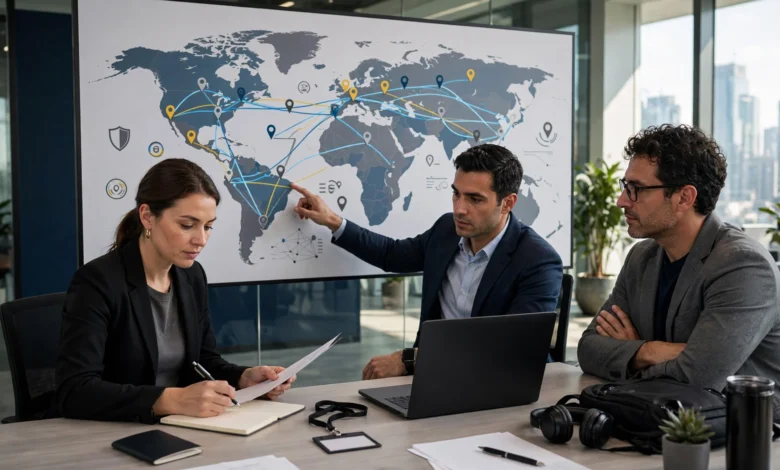
A corporate travel security program should do more than provide emergency numbers and destination briefings.
Those tools are useful, but they address only part of the responsibility. A complete program must help the organization assess travel before departure, support employees while they are moving, respond when conditions change, and document how decisions were made.
That requires structure.
An effective corporate travel security program connects governance, traveler preparation, risk assessment, monitoring, escalation, and incident response. Each component should work as part of one coordinated system rather than as a collection of separate travel services.
Clear Program Ownership
The first requirement is defined ownership.
Someone must be accountable for how travel risk is assessed and managed across the organization. That person or function does not need to arrange every trip. However, they should set standards, clarify responsibilities, and ensure that higher-risk travel receives the right level of review.
Without clear ownership, travel security often becomes fragmented.
Travel teams may manage logistics. HR may handle policy. Legal may advise on the duty of care. Security may become involved only when a destination appears dangerous. Executive support teams may create their own processes for senior leaders.
Each group may be doing useful work, but no one has a complete view.


A strong program identifies who owns:
- travel risk standards
- higher-risk trip reviews
- monitoring and alerting
- traveler communication
- incident escalation
- leadership reporting
- post-incident review
That clarity reduces delays when a trip becomes more complicated.
A Defined Governance Framework
Travel security needs governance, not just activity.
Governance explains how decisions are made, who has authority, and what evidence the organization maintains. It also helps ensure that employees receive consistent support rather than different levels of care based on who arranged the trip.
A governance framework should define:
- How trips are categorized by risk
- When an additional assessment is required
- Which teams participate in decisions
- Who can recommend delaying or changing travel
- What incidents require leadership notification
- How actions are documented
This structure should support business travel rather than make routine movement unnecessarily difficult.
Standard trips can follow a lighter process. Travel involving senior executives, unstable environments, public appearances, or limited local support may require a more detailed review.
The program should make that distinction before problems arise.
Travel Risk Assessments
A strong program needs a repeatable process for assessing travel risk.
General country ratings can provide useful background, but they should not be the only source of analysis. Risk can vary within the same country or city. It can also change based on timing, route, traveler profile, and business purpose.
A useful assessment considers:
- political and security conditions
- crime and civil unrest
- medical resources
- transportation reliability
- infrastructure concerns
- local events
- traveler visibility
- purpose and sensitivity of the trip
- the organization’s ability to provide support
The assessment should lead to practical decisions.
It may confirm that the trip can proceed as planned. It may identify a need for additional preparation, route changes, secure transportation, monitoring, or local support. In some cases, it may support delaying or reconsidering the trip.
Itinerary and Movement Review
The itinerary should be reviewed as a pattern of movement, not just a calendar.
Travelers often face the most exposure while moving between airports, hotels, offices, meeting sites, and public venues. Tight schedules, repeated routes, late arrivals, and public pickup locations can create problems that do not appear in a destination summary.
An itinerary review may examine:
- arrival and departure times
- airport transfers
- transportation providers
- route options
- hotel and venue locations
- entry and exit points
- schedule flexibility
- backup arrangements
This is especially useful for executives and travelers attending public-facing or sensitive events.
The purpose is not to create unnecessary controls. It is to identify pressure points before the traveler encounters them.
Traveler-Specific Risk Review
Not every traveler faces the same level of exposure.
An employee attending an internal meeting may require standard preparation. A senior executive, public spokesperson, or person involved in a sensitive transaction may need a more detailed review.
Traveler-specific factors can include:
- seniority
- public profile
- prior threats
- media attention
- online hostility
- business role
- personal health needs
- nationality or identity-related concerns in the destination
The trip and the traveler should be considered together.
A location may be generally stable while still presenting additional concerns for a particular executive or employee. A strong program gives the organization a way to recognize that difference.
Pre-Trip Preparation
Travelers need practical information they can use.
A long country report may provide context, but it is not always the best tool for the traveler. Preparation should focus on the conditions most relevant to the itinerary and the actions the employee may need to take.
Pre-trip preparation can include:
- current destination concerns
- transportation guidance
- communications procedures
- medical resources
- emergency contacts
- local customs and laws
- route or venue considerations
- what to do if plans change
- when and how to request support
Higher-risk travelers may also benefit from scenario-based training.
The goal is to prepare employees to make sound decisions, not overwhelm them with information.
Real-Time Monitoring
Pre-trip preparation has limits because travel conditions can change after departure.
A complete program needs a way to monitor developments that may affect travelers. This can include severe weather, protests, transportation failures, political events, security incidents, and medical or infrastructure concerns.
However, monitoring should not be treated as an alert subscription.
Someone must review the information and determine whether it affects the traveler’s actual location, route, or schedule. A broad alert may have no practical effect. A smaller local incident may require immediate attention.
Effective monitoring therefore requires both technology and human judgment.
24/7 Traveler Support
Travel incidents do not follow office hours.
Employees may need help during nights, weekends, holidays, or while internal teams are unavailable. A travel security program should give travelers access to support whenever they are moving.
That support may involve:
- assessing a developing event
- helping a traveler change routes
- coordinating medical assistance
- arranging alternative transportation
- supporting relocation or evacuation
- contacting family or internal stakeholders
- guiding the traveler through a local emergency
The support function needs current itinerary information and clear authority.
Otherwise, the traveler may reach someone who can take the call but cannot coordinate an effective response.
Defined Incident Escalation
An incident response process should be established before the incident occurs.
The program needs clear thresholds for when a travel issue moves from routine support to a wider organizational response.
For example, escalation may be required when:
- an employee cannot be contacted
- an executive faces a credible threat
- several travelers are affected at once
- a medical emergency occurs
- a trip is disrupted by political violence
- evacuation or relocation may be necessary
- the incident could affect operations or reputation
The program should identify who needs to be involved at each level.
That may include security, HR, legal, operations, executive support, communications, or senior leadership. Defined roles help prevent confusion and duplicated effort during a live event.
Reliable Communication
Communication is one of the most important parts of traveler support.
The organization needs a reliable way to reach employees, confirm their condition, provide instructions, and receive updates. Travelers also need to know which channel to use when they need help.
A communication plan should include:
- a primary contact method
- backup communication options
- traveler check-in procedures when necessary
- internal notification responsibilities
- escalation if the traveler cannot be reached
The plan should account for limited mobile service, poor internet access, and rapidly changing local conditions.
Short, practical instructions are often more useful than long messages during an incident.
Duty-of-Care Documentation
An effective travel security program should create a record of the organization’s decisions and actions.
That includes more than documenting serious incidents. The program should also show how higher-risk trips were reviewed, what guidance was provided, and how relevant concerns were addressed.
This is part of what a corporate travel security program should deliver in practice. It should give the organization a repeatable process and evidence that reasonable steps were taken before and during travel.
Useful records may include:
- travel risk assessments
- itinerary reviews
- traveler briefings
- alerts and monitoring notes
- escalation decisions
- support provided
- incident timelines
- post-incident findings
Documentation supports internal review and strengthens leadership visibility into how the program is operating.
Post-Incident Review
The program should learn from each meaningful incident.
Once the traveler is safe and the immediate response has ended, the organization should examine what happened and whether the process worked as intended.
The review may ask:
- Was the risk identified early enough?
- Did the traveler receive useful preparation?
- Was monitoring relevant and timely?
- Were escalation roles clear?
- Could the traveler be contacted quickly?
- Did external support perform well?
- What should change before future travel?
Lessons should feed back into policy, training, assessments, vendor arrangements, and escalation procedures.
Without this step, the organization may repeat the same weaknesses.
Leadership Reporting
Leadership needs a useful view of the program.
Senior decision-makers do not need every routine travel detail. They do need information about major incidents, recurring risks, program weaknesses, response quality, and changes that require investment or policy decisions.
Reporting may include:
- significant incidents
- higher-risk travel activity
- emerging regional concerns
- response times
- recurring traveler issues
- unresolved program needs
- recommended improvements
This gives leadership evidence of continuing oversight rather than awareness only after a serious event.
Support That Scales With the Organization
A corporate travel security program should match the company’s actual operating model.
A small organization with occasional international travel will not need the same structure as a global firm with frequent executive movement. The program should be able to scale based on travel volume, destination exposure, workforce profile, and business priorities.
That may mean creating different support levels for:
- routine domestic travel
- international business travel
- higher-risk destinations
- executive movement
- major events
- crisis periods
A scalable structure allows the organization to focus resources where they are needed most.
Conclusion
An effective corporate travel security program should include much more than destination briefs and emergency contact information.
It needs defined ownership, governance, risk assessments, itinerary review, traveler preparation, live monitoring, 24/7 support, escalation, documentation, and leadership reporting.
Each component supports the others.
When those elements work together, the organization can prepare travelers more effectively, respond faster when conditions change, and demonstrate a more accountable approach to duty of care.